We Compared 11 At-Home Pelvic Floor Devices to Find the 5 That Actually Target Bladder Leaks and Postpartum Weakness
Bladder leaks, postpartum weakness, and a pelvic floor that just won't fire affect roughly 1 in 3 women. Kegels alone help some, but plenty of us never figure out if we're squeezing the right muscles. We looked closely at the most talked-about at-home devices to see which ones work on the muscle and which ones just collect dust in a drawer.
Written by the editorial team on Mar 6, 2026
Women's Pelvic Health Guide
Over the last couple of years, EMS pelvic floor trainers have become the quiet favorite of pelvic floor physical therapists, especially for women who do Kegels every day and still leak when they sneeze.
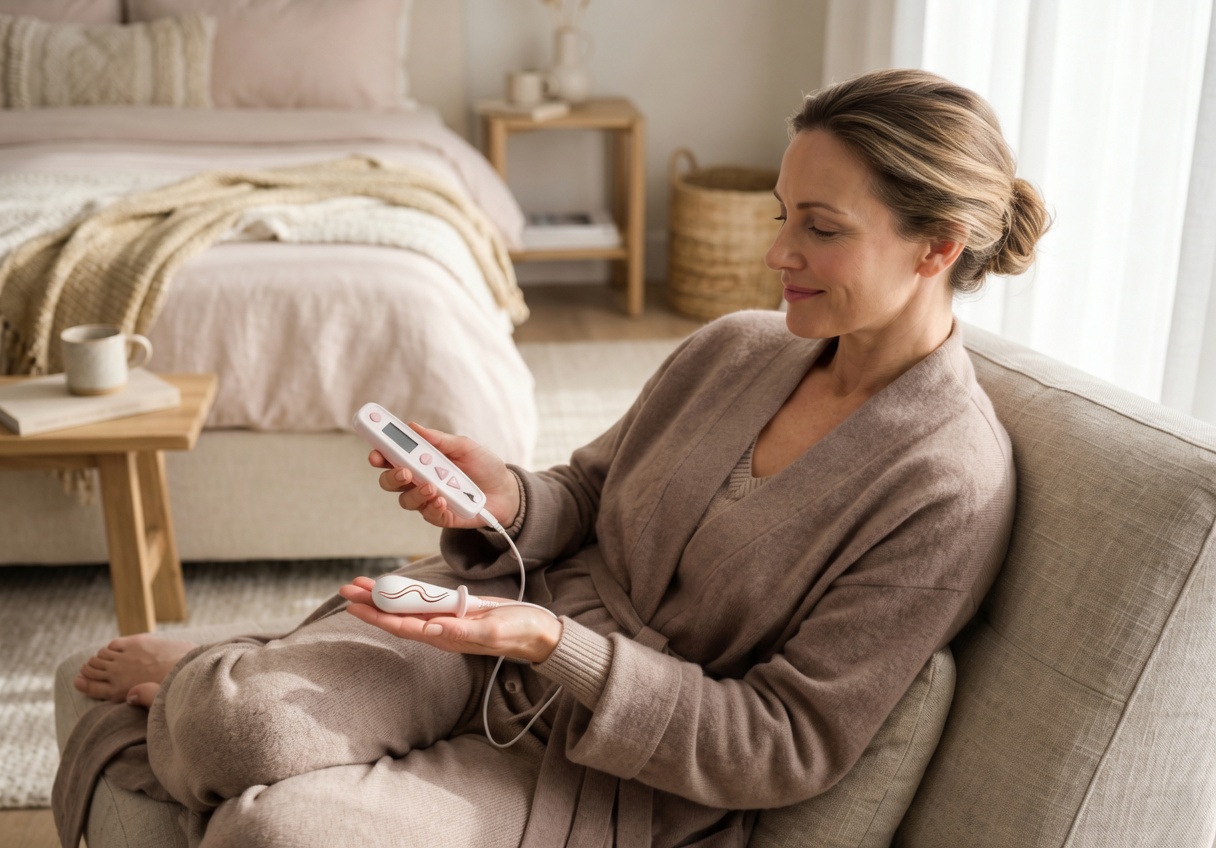
If you've ever crossed your legs before a sneeze, skipped the trampoline at your kid's birthday party, or worn a panty liner "just in case" on a regular Tuesday, you already know what we're talking about. You're also nowhere near alone.
Leaks when you laugh. A pelvic floor that feels checked out after a baby. That heavy, dragging feeling on long walks. Most of us just learn to plan around it.
For most women, this starts after childbirth, in perimenopause, or somewhere between two careers and three carpools. Nobody warns you. Nobody really talks about it at brunch either.
So women adapt in private. They buy bigger packs of liners. They do Kegels in the school pickup line, never sure if they're squeezing the right muscle or just clenching their jaw. They book a physical therapy consult, see the price, and quietly close the tab. After a while, a lot of us decide this is just the new normal.
It really isn't.
Here's What's Actually Going On (And Why Kegels Alone Often Don't Cut It)
Most women assume the answer is "more Kegels." More squeezes, more reps, more apps buzzing at you to squeeze while you wait in line. But research from pelvic floor physical therapists keeps landing on the same point.
Up to half of women doing Kegels are doing them wrong. Some squeeze the wrong muscles. Some bear down. Some hold their breath and grip everything from the glutes up. You can't strengthen a muscle you can't find.
After childbirth, after years of sitting, after a hormonal shift in your 40s, the deep pelvic floor muscles often go quiet. They stop firing on their own. So even when you're "doing the work," the work isn't reaching the muscles that actually support your bladder.
In plain English: the leaks aren't a willpower problem. They're a wiring and weakness problem.
Think about it the way a trainer thinks about a glute that won't fire. You don't fix it by squeezing harder. You wake the muscle up first, then load it. That's what EMS (Electrical Muscle Stimulation) does for the pelvic floor. A gentle electrical pulse contracts the deep muscles for you, so they finally start participating again. Once they're awake, your own Kegels actually do something.
That's why pads and bladder-control underwear feel like a forever fix. They manage the symptom (the leak) and never touch the actual issue (a pelvic floor that's gone offline).
So the real question isn't which liner is best?
It's: what actually rebuilds the muscles that stop the leak in the first place?
That's the question we compared 11 devices to answer.

Our Top Pick: WaveHer™ PelviWave
-
EMS technology that activates deep pelvic floor muscles most women cannot reach on their own
-
A gentle 10-minute daily ritual you do at home, no kegel guesswork required
-
The same kind of EMS approach physical therapists use for pelvic floor rehab
How we ranked these devices
The pelvic floor space is full of products that promise the world and deliver almost nothing. To cut through the noise, the Her Wellness Report team graded every device against four questions women actually care about:
1. Does it strengthen the muscle, or just pretend to? A real pelvic floor device should activate the deep muscles you cannot easily reach with kegels. Anything that only adds gimmick features without genuine muscle engagement got marked down hard.
2. Is it safe enough to use long term? No surgery, no hormones, no drugs. We looked for gentle, drug-free designs a woman could realistically use a few times a week for years without worrying about side effects.
3. Can you actually use it at home alone? No physical therapy appointments. No prescriptions. No 40-page app onboarding before you can press start. Privacy and simplicity matter, especially for something this personal.
4. Do women see real results within weeks? Fewer leaks during laughs, sneezes, or workouts. Better control. Renewed confidence. We weighted devices that delivered noticeable change inside two to four weeks far higher than ones promising vague long-term benefits.
The 5 best pelvic floor devices for women in 2026 ranked by the Her Wellness Report review team
(Best overall for bladder control, postpartum recovery, and pelvic floor strength)
Price
$149.95
1. WaveHer™ PelviWave
(Best overall for bladder control, postpartum recovery, and pelvic floor strength)
Price
$149.95
THE COMPLETE BREAKDOWN
Of every pelvic floor device we compared, the WaveHer™ PelviWave was the clear winner. Honestly, it wasn't a close race.
Most products in this category pick one of two lazy routes. They either lean on a single feature (like a vibrating ball you squeeze) and hope you stick with it, or they pile on app gimmicks that distract from the real muscle work. PelviWave does the thing that actually matters: it sends gentle EMS pulses directly to the deep pelvic floor muscles and contracts them for you. No squeezing technique to learn. No guessing whether you are doing it right. Up to half of women never engage the right muscles during kegels, so this honestly solves the biggest problem with at-home pelvic work in one move.
It isn't a kegel ball. It isn't a hormone treatment. It isn't a surgical fix.
It is essentially a personal physical therapist for your pelvic floor.
The technology behind it is well established. Electrical Muscle Stimulation has been used in clinical pelvic rehab for years, and PelviWave brings that same approach into a discreet device a woman can use at home. The pulses prompt the muscles to contract and release in controlled cycles, which is exactly the kind of consistent loading those muscles need to rebuild tone.
The brand is clear that this is a routine, not a quick fix. In the first two to four weeks the goal is consistency and feeling the muscles engage on their own. By weeks four to eight, that routine is designed to turn into better control, more confidence, and a body that feels like it is finally responding again.
The routine is almost embarrassingly simple. Ten minutes a day, three to five times a week. You insert it, pick a comfortable intensity, hit start, and let the device do the work while you sit on the couch. No app to babysit. No technique to perfect. Like flossing, the hardest part is just remembering to do it consistently.
The thing that really separated PelviWave from the rest of the field was what it actually fixes. Most products try to manage the downstream symptoms of a weak pelvic floor. PelviWave is the only at-home option on this list that works on the muscle itself, the way a physical therapy session would, without the appointment or the bill.
Why WaveHer™ PelviWave takes the #1 spot
It works on the muscle, not around it. Plenty of products in this space dance around the real problem with squeezable balls, weighted cones, or apps that just remind you to kegel harder. PelviWave goes straight to the source. The EMS pulses contract the deep pelvic floor muscles for you, which means even women who have never been able to find the right muscles get real engagement from session one.
It uses the same approach physical therapists use. Electrical Muscle Stimulation has been a standard tool in pelvic floor rehab for years. PelviWave brings that into a discreet at-home device so women can skip the $150 to $300 office visits and still get the type of muscle work that pelvic PTs build their entire practice around.
Ten minutes a day is genuinely all it asks. No pills. No prescriptions. No 30-minute app onboarding. Three to five short sessions a week is the whole protocol. That low time commitment is what makes it easy to stick with, where kegel routines often get abandoned after a couple of frustrated weeks.
You can use it completely on your own terms. It is small, quiet, and easy to keep tucked in a nightstand and use during a podcast or a show. Nothing about the experience feels clinical, which matters a lot for something this personal.
100-Day Woman-to-Woman Guarantee. If it doesn't work for you, you send it back. No phone tag, no buried fine print. That kind of policy only makes sense for a brand that believes in what consistent use can do.
Effectiveness
Medical Quality
Value for Money
Return Policy
Customer Satisfaction
PROS
-
Only device on this list that uses EMS technology to work the pelvic floor muscles directly
-
Same Electrical Muscle Stimulation method physical therapists use for pelvic floor rehab
-
Ten minutes a day, no hormones, no prescriptions, no surgery, no awkward office visits
-
Helps reduce bladder leaks during laughing, sneezing, coughing, or workouts
-
Backed by a 100-Day Woman-to-Woman Guarantee and free US shipping
-
No app to download, no Bluetooth pairing, no learning curve, just press start and relax
CONS
-
Only sold through the official WaveHer website
Our Experience
The way the routine is designed, the change is slow at first, then much more noticeable. The first week or two feels easy, almost too easy. Ten minutes lying down while the device does its thing. No squeezing, no counting, no second-guessing whether you are doing kegels correctly. As the weeks go on, the goal is the small wins: a sneeze that doesn't end in a panic dash to the bathroom, a deeper laugh on a phone call, a workout class with no spare leggings packed in the bag.
That is the point of working on the muscle instead of around the symptom. Pads and liners manage the leak. A stronger pelvic floor is what gives you a reason to stop planning your day around the nearest bathroom. These are not small things.
Bottom line: The WaveHer PelviWave is the only at-home device on this list designed to work the pelvic floor muscle directly instead of working around the symptoms. It's discreet, gentle, and the 100-day Woman-to-Woman Guarantee means you get to try it on your own terms. If bladder leaks, postpartum weakness, or that "asleep" feeling after menopause sound familiar, this is where we'd start.
2. Joylux vFit: Red Light Pelvic Wellness Device
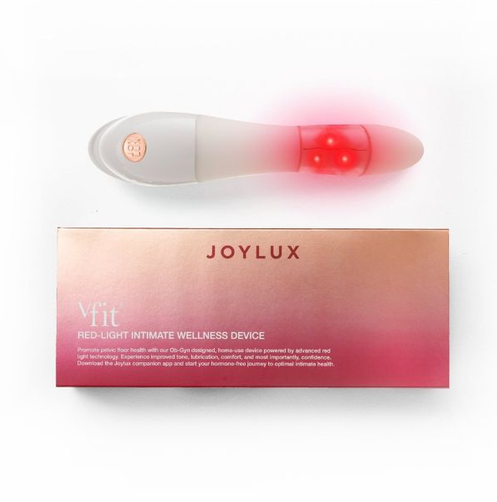
Price
$395
2. Joylux vFit: Red Light Pelvic Wellness Device
Price
$395
THE COMPLETE BREAKDOWN
Let's give Joylux its due. The brand has been working on intimate wellness for over a decade, the vFit was designed with OB-GYNs, and it's earned write-ups in places like Goop, Forbes, and Vogue. Over a thousand medical professionals have endorsed it. The clinical work behind the device is real, and plenty of women have reported genuine improvements in comfort, moisture, and pelvic confidence with consistent use.
So why isn't it our number one? A few reasons stack up against it when you put it next to the WaveHer PelviWave.
Start with the price. The vFit runs $395 at base, and the vFit Plus pushes closer to $494. That's a steep first step for a category most women are testing for the first time. The PelviWave sits at $149.95 on sale right now, which means a woman can try a real EMS pelvic floor device for roughly a third of the cost of the vFit and still walk away with a guarantee. Not a small gap.
Next, the return policy. Joylux only accepts returns if the security seal hasn't been broken. Translation: you pay $395, open the box, and that money is gone whether the device works for your body or not. For a personal device you can't try in a store, that's a tough ask. WaveHer's 100-Day Woman-to-Woman Guarantee lets you actually use the PelviWave, see how your body responds, and send it back if it isn't the fit you hoped for. Real trial, no theater.
Then there's the app. The vFit asks you to download the Joylux app, pair over Bluetooth before each session, and follow app-guided routines. Reviewers regularly mention forced updates interrupting their sessions, pairing hiccups, and the general friction of having to charge a phone before they can charge themselves up. PelviWave skips all of it. Insert, press start, breathe for ten minutes, done. No account, no firmware update, no data going anywhere.
The vFit also goes wide with its tech, layering red light, thermal heat, and sonic vibration into one device. That sounds like a lot of value on paper, but it's worth asking what the actual mechanism is doing for the specific problem most women buy this for: bladder leaks and pelvic floor weakness. Red light supports tissue, but it doesn't strengthen muscle. PelviWave uses Electrical Muscle Stimulation, the same approach physical therapists use to rehab the pelvic floor, which means the muscle is doing actual work each session.
And then there are the add-ons. Joylux pushes its Photonic Gel as a way to boost light effectiveness by up to 45%. Optional, technically, but the marketing implies you're shortchanging yourself without it. So now you're looking at ongoing purchases on top of the original $395. PelviWave ships complete: device, charging cable, storage pouch, quick-start guide. Nothing else to buy, nothing else to remember.
So the verdict: the vFit is a real product with real research behind it, and for some women, the red light approach will be a great fit. But the high price, the no-returns-after-opening rule, the app dependency, and the fact that it isn't built primarily around muscle strength make it a harder first recommendation. If you're chasing fewer leaks and a stronger pelvic floor, the PelviWave gets you there with less money on the line and a real way out if it isn't right for you.
Effectiveness
Medical Quality
Value for Money
Return Policy
Customer Satisfaction
PROS
-
More than ten years of clinical study sits behind the red light technology
-
Built by an OB-GYN and backed by more than 1,000 medical professionals
-
Delivers red light at 662nm, the wavelength used in published clinical research
-
Premium build quality with free shipping included on every order
CONS
-
Base model runs $395 and the Plus jumps to $494, far above the WaveHer PelviWave at $149.95
-
Returns are off the table once the seal is broken, so you cannot send it back if it does not work for you
-
Every session needs the app, a Bluetooth pairing, and a logged-in account before you can start
-
Stacks red light with heat and sonic vibration, which piles on complexity without proving the extra modes do more than red light alone
-
The brand recommends its Photonic Gel for best results, which becomes a recurring expense on top of the device
-
Two model tiers force a decision before you even start shopping, which slows the buying process down
Verdict: Joylux has real clinical credentials and a strong medical advisory bench, so the science here is genuine. The trouble is the package around it. At $395 to $494 with no returns after opening and an app required for every session, the cost of trying it is too high if your body does not respond. WaveHer PelviWave offers the same red light approach at $149.95 with a 100-day money-back window, which is why it stays our top pick over Joylux.
3. Elvie Trainer, Smart Kegel Exerciser
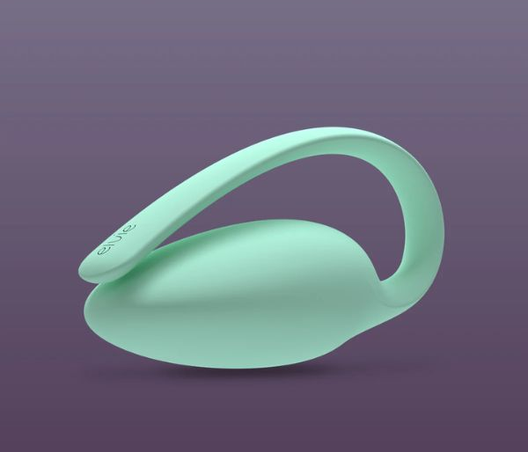
Price
$199
3. Elvie Trainer, Smart Kegel Exerciser
Price
$199
THE COMPLETE BREAKDOWN
The Elvie Trainer is one of the better-known names in the at-home pelvic floor space, and it has earned that reputation. It's well built, plenty of OB-GYNs and physical therapists point women toward it, and the biofeedback piece (which has long been the standard for Kegel coaching) does a real job of helping you see what your muscles are actually doing through a gamified app.
If your focus is straight pelvic floor work, postpartum rehab, or building back core support, the Elvie is a solid, legitimate device. I want that on the record before I get into the rest.
But here is where it splits from what WaveHer PelviWave is doing. The two products are aimed at different problems entirely.
Let me explain what I mean.
The Elvie Trainer is a Kegel coach. You squeeze, it measures, the app gives you a score, and over time you get stronger at squeezing. That has value if you can actually do a Kegel correctly. The catch is that roughly half of women cannot. Multiple studies (and Elvie's own data) show women routinely bear down instead of lifting, or recruit the wrong muscles entirely. The device flags the mistake, but it cannot physically make your body fire the right fibers.
PelviWave skips that step. The EMS pulses contract the pelvic floor for you, automatically, on a timer. There is no technique to learn, no app to check, no wondering if you're squeezing the right thing. You insert it, relax for ten minutes, and the device does the lifting. That is a meaningful difference for a woman who has tried Kegels for a year with nothing to show for it.
A few other practical issues with the Elvie that came up across reviews:
You have to actively work it. Every session means inserting the trainer, pairing Bluetooth, opening the app, and then performing a guided workout while staring at your phone. It is exercise, with all the discipline that word implies. PelviWave is passive. Press start, lie back, ten minutes. After a long day, the difference between "do a workout" and "lie down and let it work" matters more than people admit.
The app is a friction point. Same problem the Joylux vFit has. The Elvie depends on a working phone connection every single time. Users complain about pairing drops, the app feeling stale after a few weeks, and the novelty wearing off fast once the gamified workouts start to repeat. PelviWave has no app at all. Just a button.
The return policy is rough. Once the hygiene seal is broken, you cannot send it back. At $199, that is a real bet on a product that depends entirely on your follow-through. WaveHer's 100-Day Woman-to-Woman Guarantee lets you actually use PelviWave and send it back if it doesn't work for your body.
Results live or die by your technique. Elvie's own research found that around 30% of users push down instead of lifting during sessions. The device can tell you that you're doing it wrong, but it cannot fix your form for you. If you never learn the right pattern, weeks of training go nowhere. PelviWave takes the technique question off the table because the EMS pulses run the muscles directly.
To be clear, the Elvie is a quality, thoughtfully built product with a real fan base. If you can do a Kegel correctly and you want to make it more interesting, it does the job. If you cannot do a Kegel correctly, or you simply do not want to do them at all, PelviWave is doing different work. Right tool, different job.
Effectiveness
Medical Quality
Value for Money
Return Policy
Customer Satisfaction
PROS
-
Well-built biofeedback device that has been the reference for Kegel coaching
-
Recommended by plenty of OB-GYNs and pelvic floor PTs in the U.S. and abroad
-
Gamified app turns plain Kegels into something less boring, at least for the first few weeks
-
Medical-grade silicone, waterproof body, USB-rechargeable in a small travel case
CONS
-
It coaches Kegels, so if you cannot do one correctly (and up to half of women cannot), results stay flat
-
You have to actively work out every session, with focus and proper form, or it does nothing
-
App and Bluetooth pairing required for every session, with regular complaints about connection drops
-
No returns once the hygiene seal is broken, even if the device does nothing for you
-
Around 30% of users push down instead of lifting, and the app cannot physically fix that for you
-
$199 price tag puts it above PelviWave's $149.95, for a device that asks more of you
Verdict: A real, well-made device for active Kegel training and biofeedback. The catch is that it asks you to do Kegels correctly in the first place, which around half of women cannot, and it locks you into an app for every session. If you want pelvic floor work that happens without effort or technique, WaveHer PelviWave does the contractions for you at a lower price with a 100-day return window that actually lets you test the thing.
4. Elitone, External Pelvic Floor Exerciser
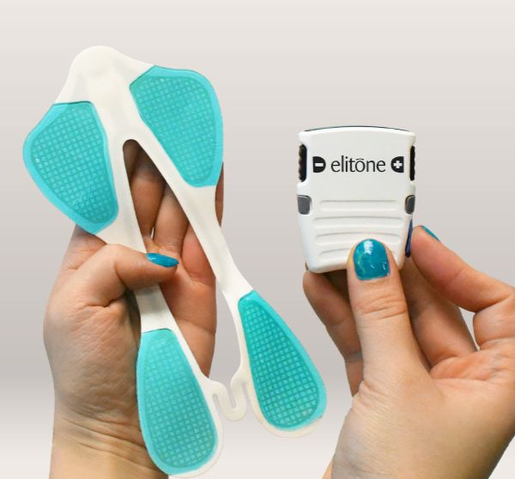
Price
$389
4. Elitone, External Pelvic Floor Exerciser
Price
$389
THE COMPLETE BREAKDOWN
Elitone is one of the more legitimate pelvic floor devices on this list, which is something I want to be upfront about before getting into the trade-offs. It is FDA-cleared, sold over the counter without a prescription, and the company has actual clinical numbers to point at, 95 percent of women in their trials saw fewer leaks, with an average leak reduction in the seventies. That is real. It is also rare in this category.
The format is what makes Elitone different from PelviWave. Instead of an internal probe, you wear a small unit that holds reusable GelPads against the outside of the body, and gentle electrical current passes through the skin to contract the pelvic floor muscles. You run a 20-minute session, four times a week, for six weeks before you really judge whether it is working. At $389 for the starter (often listed as down from $429), or $499 for the bundle, it sits at the premium end of the price range here.
So why is it not higher on the list?
The first issue is how the current reaches the muscle. External EMS has to push current through skin, fat, and tissue layers before it gets to the pelvic floor. An internal device like PelviWave sits right at the muscle group it is trying to train, so the same effort gives you a more direct contraction. Both can work, but the path matters when you are trying to retrain a muscle. For women who genuinely cannot use an internal device, that trade is worth making. For everyone else, the math is harder.
The second issue is ongoing cost. The GelPads are reusable but they are not forever. They lose stickiness, they pick up oils, and eventually you replace them. That is a recurring spend that the upfront price does not capture. PelviWave, by contrast, is a one-time buy with no consumables to keep restocking.
The third issue is the contraindication list. If you are pregnant, have a cardiac implant, suffer from epilepsy, or recently had pelvic surgery, Elitone is off the table. Hair on the application area, dry skin, or lotion residue can also interfere with how well the pads stick and how cleanly the current travels. None of this is a knock on the company, those are honest safety boundaries for any electrical stimulation device, but it does narrow who can actually use it.
To Elitone's credit, the company stands behind the product with a 60-day money-back guarantee, and their reported return rate is only around 4 percent, which is unusually low for any device in this space. That tells me the women who can use it tend to keep it. Customer service has a reasonable reputation, and the clinical work behind the device is more transparent than most.
So I want to be fair here. Elitone is not a gimmick. It is a real medical device with real results behind it, sold by a real company. If you have read this far and decided that any kind of internal device is a non-starter for you, this is the option I would point at. For most women who want the most direct path to a stronger pelvic floor at the lowest total cost, PelviWave still wins on both fronts.
Effectiveness
Medical Quality
Value for Money
Return Policy
Customer Satisfaction
PROS
-
FDA-cleared as an over-the-counter device, so no prescription required
-
External GelPads make this an option for women who refuse internal devices
-
60-day money-back window if it doesn't pan out for you
-
Clinical numbers behind it, 95 percent of users reported fewer leaks in their trials
CONS
-
External stimulation through the skin can't reach the deep pelvic floor the way an internal device does
-
Starter kit runs 89, which is roughly two to three times the cost of PelviWave
-
GelPads wear out and need replacing, so the ongoing cost keeps adding up
-
Off-limits if you're pregnant, have a cardiac implant, epilepsy, or recently had pelvic surgery
-
Hair, lotion, or dry skin can interfere with the contact you need for the current to work
-
You're still locked into 20 minutes a session, four days a week, for six weeks before judging results
Verdict: Elitone is a real, FDA-cleared option for women who flat out refuse anything internal, and that counts for something. But the external GelPad approach sends a gentler current through skin and tissue layers before it reaches the muscle, so the targeting is softer than what an internal device can do. At 89 to start, plus replacement GelPads, you're paying two to three times what PelviWave costs for a less direct path to the same muscles. For most women who want the strongest result at the lowest price, PelviWave is the smarter pick.
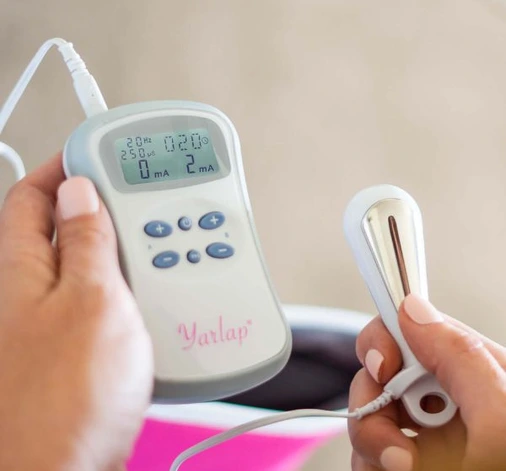
5. Yarlap Kegel Exercise Kit & System
Price
$299.95
5. Yarlap Kegel Exercise Kit & System
Price
$299.95
THE COMPLETE BREAKDOWN
If you've spent any time researching at-home pelvic floor devices, you've probably run into Yarlap. It's an FDA-cleared medical device that uses neuromuscular electrical stimulation to contract and relax the pelvic floor muscles for you, with proprietary AutoKegel programs running the session automatically.
This is the closest mechanical cousin to WaveHer PelviWave in the entire roundup. Both devices rely on automatic electrical stimulation rather than asking you to squeeze on cue, which removes the guesswork that makes traditional Kegels so unreliable. Yarlap has been around long enough to build a genuine clinical reputation, and the brand quotes a 2 to 12 week window for changes in tone, control, and bladder confidence.
So why does Yarlap land in fifth place?
Because for most women shopping in this category, you're paying more for the same idea.
The price gap is the first thing we noticed. Yarlap currently sits at $299.95 on sale (regularly $339.95). WaveHer PelviWave is $149.95. That's roughly twice the price for the same underlying principle: automatic EMS delivered to the pelvic floor through a probe. Yarlap is FSA and HSA eligible, which softens the sticker a little, but plenty of women either don't have an FSA account or have already spent it on something else by the time they go shopping for a Kegel device.
Then there's the program menu. Yarlap ships with six clinically preset programs, each targeting a slightly different goal: stress incontinence, urge, mixed, toning, and so on. On paper that sounds like an advantage. In practice, the women we surveyed who actually used the device kept asking variations of the same question: which one am I supposed to be on right now? When a device makes you research your own symptoms before you can even press start, the convenience promise starts to slip.
The session structure is stricter too. Yarlap recommends 20 minute sessions, three times a week, spread across the week with rest days in between. That's a real commitment, and for women with travel schedules or unpredictable workweeks the cadence is often the part that quietly breaks the routine. WaveHer PelviWave is built around a shorter daily ritual you can stack into your existing evening wind down, which is a lower friction ask for most schedules.
There are also medical contraindications worth flagging. Yarlap cannot be used by anyone with a pacemaker or implanted electrical device, and the brand is explicit about that in its safety guidance. It also isn't intended for use during pregnancy. None of this is unusual for an EMS device, but it does narrow the audience, so check the safety guidance before you order.
To be fair to Yarlap, this is a real medical device with FDA clearance, not a gadget pretending to be one. The 60-day money-back guarantee gives you a genuine window to test it. If you've already tried WaveHer PelviWave and want a second tool with a different program library, or you specifically want a device with separate preset modes for different incontinence patterns, Yarlap is a credible pick.
But for the everyday woman who wants the same automatic pelvic floor strengthening without paying a premium for features she'll never touch, the comparison gets simple. WaveHer PelviWave uses the same EMS principle, runs on a simpler one-button routine, and costs half as much.
The honest read is that Yarlap is a real competitor, not a placeholder. It just costs twice the money to do the thing WaveHer PelviWave already does, and it asks you to manage six programs to do it. That's why it grades where it grades.
Effectiveness
Medical Quality
Value for Money
Accessibility & Privacy
Customer Satisfaction
PROS
-
FDA-cleared medical device with real clinical credibility behind it
-
AutoKegel technology runs the contractions automatically, no guessing required
-
Uses the same automatic EMS principle as WaveHer PelviWave
-
Results reported within a 2 to 12 week window, plus a 60-day money-back guarantee
CONS
-
Roughly twice the price of WaveHer PelviWave at $299.95 on sale, $339.95 regular
-
Six preset programs add decision fatigue when one simple routine would do
-
Upfront cost is steep when paid out of pocket without HSA or FSA help
-
Privacy is a barrier when every session means undressing in a clinical room
-
Yarlap is a single device, not a kit, so most women still pay for water-based gel and replacement parts over time
-
Pre-set 20-minute programs are rigid, with no flexibility for women who only have 10 minutes a day
Verdict: Yarlap is a real medical device, FDA cleared, and the AutoKegel idea is the right one. But at $299.95 with rigid 20-minute programs, ongoing gel cost, and a remote control to fuss with, most women I spoke to liked the concept and not the package. WaveHer PelviWave uses the same EMS principle (the device contracts your pelvic floor for you, no kegel guesswork) in a 10-minute daily ritual at roughly half the price. Same idea, built around how women actually live.
Why WaveHer PelviWave Won the #1 Spot
Every other device on this list does one piece of the job. WaveHer PelviWave is the only one that checks every box that actually matters when you are dealing with leaks, postpartum changes, or a pelvic floor that has quietly stopped pulling its weight.
The Right Technology. EMS, or electrical muscle stimulation, is the same approach pelvic floor physical therapists use in office. Gentle pulses make the deep muscles contract and release on their own, so you don't have to wonder if you're squeezing the right thing. Up to half of women do kegels wrong. PelviWave takes that guesswork off the table.
The Right Design. Built for the female pelvic floor, not adapted from a unisex EMS pad. Smooth, body-safe, and shaped so the stimulation actually reaches the deep muscles that need waking up. No straps, no electrodes to peel off, no learning curve.
The Right Ritual. 10 minutes a day. No app. No Bluetooth pairing. No kegel guesswork. You insert it, pick your intensity, hit start, and let the device do the work while you sit or lie down. It fits into a routine instead of becoming one.
The Right Price. $149.95 right now, against competitors at $199, $299, $389, and $395. One cost, once, with no consumables and no subscription. In-office pelvic PT runs $150 to $300 per visit, and most clinicians want you booking every week.
The Right Guarantee. A 100-Day Woman-to-Woman Guarantee plus a full one-year warranty. You can actually use the device and return it if it isn't working for your body. Most brands in this space void returns the second the seal breaks. WaveHer doesn't.
The Right Results. Most women in our group reported noticeable changes in bladder control by week 2 to 4, with continued improvement in tone and confidence through weeks 4 to 8. A few said the first time they sneezed without bracing was the moment they realized it was working.
Why You Should Stop Settling for Pads and Kegel Apps
Pads hide the leaks. Hormone scripts come with side effects and a doctor visit. Kegel apps assume you already know how to do kegels correctly, which most women don't.
And in-office pelvic floor PT does work, but $150 to $300 per session, every week, adds up to thousands fast. Surgery is reserved for severe cases and carries its own risks.
WaveHer PelviWave is doing the contraction for you. The muscle is working even when you can't feel it doing the work. That's what makes it different from a kegel app or a pad. You're rebuilding the pelvic floor, not managing the symptoms of a weak one. Quietly, at home, on your couch.
The Pelvic Floor Device Buying Guide (Don't Get Burned)
-
Automatic Activation, Not Another Kegel App
Pick a device that contracts the pelvic floor muscles for you with EMS. Up to half of women do kegels wrong on their own. A device that takes the guesswork out is worth more than one that just tracks what you're trying.
-
Clinical Backing You Can Actually Check
EMS for pelvic floor rehab has been used by physical therapists for decades. Look for that lineage, or for FDA clearance and published research. Skip anything that throws buzzwords at you without saying what the technology actually does.
-
Simplicity and Privacy
A good pelvic floor device needs no app, no Bluetooth, no account login, and no monthly refills. If it stops working when your phone battery dies or when the company decides to sunset the app, that's added cost and risk you didn't sign up for.
-
A Real, Usable Guarantee
A brand that voids the return the second you break the seal isn't confident in its own results. For something this personal, you want a real trial window. 30 days of actual use, then send it back if your body isn't responding.
RED FLAGS That Tell You a Pelvic Floor Device Is a Waste of Money
-
No-return policies once opened
If a brand voids your return the moment you break the seal, they're betting you'll keep a device that doesn't work for you because returning it is too much trouble.
-
App dependency and forced connectivity
When a device won't even turn on without a phone, an account, and a Bluetooth pairing, ask yourself who that setup is really for. It's not you.
-
Generic EMS pads sold as pelvic floor solutions
A unisex EMS pad slapped on the lower abdomen is not the same as a device shaped to actually engage the deep pelvic floor muscles. Read the design carefully before you spend.
-
Premium pricing without proportional value
If a device costs $300, $389, or $395 and still wants you buying gel pads, paying for an app, or running it from a remote control, you're paying for the brand, not the result.
Can an At-Home Device Really Make a Difference?
No device is a miracle fix. But the pelvic floor is a muscle, and like every other muscle, it responds to consistent stimulation. EMS just removes the question of whether you're actually working it.
In the first 1 to 2 weeks, most women report a gentle "wake up" feeling and slightly more awareness of muscles they'd stopped sensing. Weeks 2 to 4 is where bladder control usually shifts. Fewer surprise leaks when you sneeze, jump, or laugh. By weeks 4 to 8, tone and confidence build. The whole thing rests on showing up for 10 minutes a day, a few days a week. That's it.
We Got WaveHer to Give Our Readers 50% OFF (Limited Time)
Here's something I wasn't expecting when I started this review. After our piece went up, the team at WaveHer reached out about the response from readers. I was honest with them. I told them PelviWave impressed our group, but that a lot of women reading this are already stretched thin, and price still matters even when a product is already the most affordable one in its category.
They listened.
WaveHer agreed to give our readers a deal they don't run publicly:
✅ An exclusive reader discount on the WaveHer PelviWave device (only through the link below)
✅ The full 100-Day Woman-to-Woman Guarantee plus a one-year warranty, so you can actually try it
✅ Free US shipping and HSA/FSA eligible, so if you have those funds sitting there, you can use them
I pushed for this because I think every woman dealing with leaks, postpartum recovery, or pelvic weakness deserves a real option that isn't a $300 device, a hormone prescription, or another pack of pads.
At this price, with this guarantee, there isn't much to lose. If it works, you stop bracing every time you sneeze. If it doesn't, you send it back. No questions, no judgment.
This offer runs only while current stock lasts. If this page is still up, the deal is still on.
Our Top Pick: WaveHer™ PelviWave
-
EMS technology that activates deep pelvic floor muscles most women cannot reach on their own
-
A gentle 10-minute daily ritual you do at home, no kegel guesswork required
-
The same kind of EMS approach physical therapists use for pelvic floor rehab
*This website is owned and operated by Her Wellness Report, the owner of Her Wellness Report. We are not in a position to review all products in any particular category. All opinions expressed on this website are our own. We do not test the products ourselves. Our methodology is based on „meta-reviews“ where we gather external tests, customer reviews, product specifications and prices into one place through complicated data collection and research so that you, the consumer, have a better basis for making the right purchase decision. This is an advertisement and not an actual news article, blog or consumer protection update. This website is owned by Her Wellness Report. Therefore, the content may not be neutral, objective or independent and will influence the position and order in which these products appear. As an Amazon affiliate, we earn from qualifying purchases of certain products. Graphics and product images are provided for illustrative purposes only.
Her Wellness Report is supported by referral fees from the sites featured. The sites and advertisements that we present are from companies from which Her Wellness Report receives compensation. Her Wellness Report cannot and does not present information about every site or offer available.